ServicesDrywall Finishing
Drywall Finishing in Bayonne
Hanging the board is only the first half. We tape every seam, install corner bead, build up joint compound in thin layers and sand it flat so the wall paints like a single smooth surface. Plan the work with us and you see the schedule before the first bucket is opened.
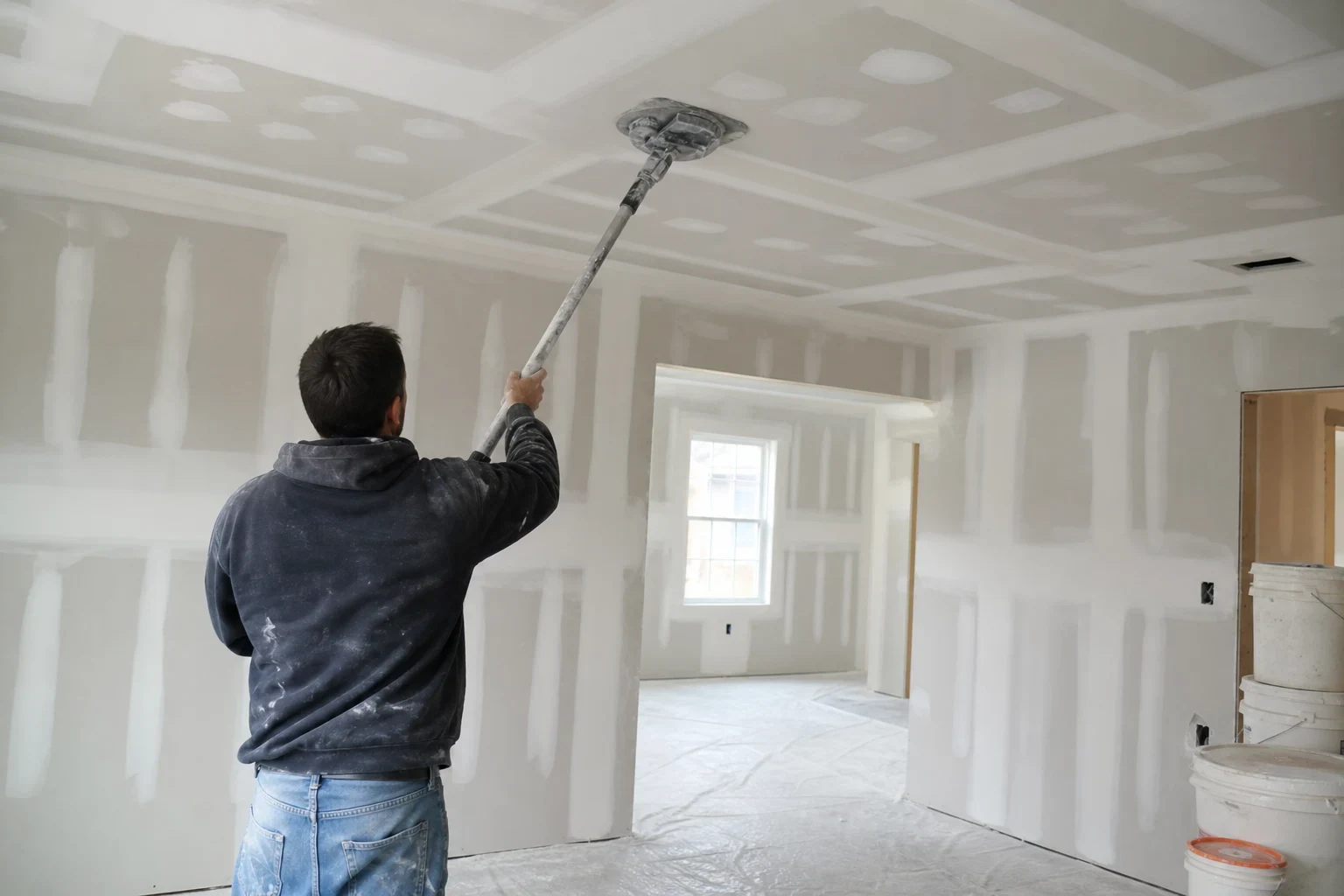
What drywall finishing is and when you need it
Finishing is everything that happens after the sheets go up. Seams get tape. Screw heads get covered. Outside corners get metal or paper-faced bead. Then come two or three coats of joint compound, each one wider and thinner than the last, with sanding in between.
You need it after new drywall is hung, after a big section is replaced, or when an earlier finish job left ridges and visible tape. It is also the right call when a wall will be painted in a flat or eggshell sheen and raking light from a window shows every flaw.
We finish rooms where we did the drywall hanging, and we also pick up jobs where someone else hung the board. Booking it a few weeks out gives the compound time to dry properly, which matters more than most people think.
What our finishing work includes
Taping every seam
We bed paper or mesh tape in compound along flat seams and inside corners. Paper tape is our default for inside corners because it creases clean and resists cracking.
Corner bead on outside edges
Outside corners take the most bumps. We set bead straight and plumb, then feather compound out so the corner is crisp without a bulge.
Coats built up the right way
A fill coat, then a wider second coat, then a thin finish coat. Each one dries fully before the next goes on.
Fastener spotting
Every screw head gets three passes of compound. Skipping a pass is why screw pops show through paint later.
Sanding and a clean work area
We sand with fine grit and a light touch so we do not scuff the paper face. Floors are covered, doorways are sealed with plastic and we vacuum the dust before we leave.
Level 5 skim coat when it makes sense
For walls with strong side light or glossy paint, we can skim the whole surface. We will tell you if your room needs it or if a standard Level 4 finish is enough.
Signs your drywall needs finishing work
You can see the tape
Lines showing through paint, or tape edges lifting, mean the compound was too thin or the tape was not bedded well.
Ridges along the seams
Hold a flashlight flat against the wall. Raised humps at the joints mean the coats were not feathered wide enough.
Screw heads showing as dimples
Small round spots in a grid pattern are fasteners that were under-coated or set too deep.
Cracked inside corners
Hairline cracks where walls meet the ceiling often come from corners finished with too much compound or the wrong tape.
New board that was never finished
Bare drywall from a renovation that stalled needs full taping and coating before primer will look right.
How a finishing job runs
- 1
We talk it through by phone
You tell us the room size, whether the board is already hung and what sheen you plan to paint. We give you a rough plan and set a date for a look in person.
- 2
Walkthrough and written estimate
We check the seams, corners and fasteners and note any loose or damaged board. You get a line-item estimate and a schedule showing how many visits the coats will take.
- 3
Prep and first coats
We cover floors, seal doorways and protect outlets. Tape and the fill coat go on the first day.
- 4
Drying time between visits
Compound needs to dry hard before the next coat. In humid summer weather that can take longer, so we plan return visits around it instead of rushing.
- 5
Final sanding and handoff
We sand, check every joint under a work light and touch up what needs it. The wall is left primer-ready and the room is vacuumed.
What affects the cost of drywall finishing
Finishing is mostly labor and drying time, so the price follows how much seam and corner work a room has and how smooth it needs to be. We price after seeing the space and put each part on paper so you can budget ahead.
- Square footage and seam count
- More sheets mean more joints. A room with lots of short pieces costs more to finish than one hung with full sheets.
- Level of finish
- A Level 4 finish suits most painted walls. A Level 5 skim coat adds a full extra layer and more sanding.
- Corners, ceilings and angles
- Ceilings, outside corners, arches and sloped attic walls take longer than flat wall seams.
- Condition of the hanging
- Board that was hung with wide gaps, loose screws or broken edges needs fixing before finishing can start.
- Number of visits
- Each coat needs dry time, so a job is spread over several days. Rooms ready on our schedule cost less than rush work squeezed in.
Drywall finishing questions
Something not covered here? (201) 584-5880
How long does finishing drywall take?
A typical room needs three or four visits over several days, because every coat of compound must dry before the next. Cold and humid weather slow drying, and we account for that in the schedule you get.
How do Level 4 and Level 5 differ?
Level 4 is taped seams and covered fasteners with three coats, sanded smooth. Level 5 adds a thin skim coat across the whole wall. It pays off with glossy paint or strong side light; Level 4 works for most rooms.
Will you finish board another crew hung?
Yes. We inspect the hanging first and fix loose screws, wide gaps or crushed edges before any tape goes on, so the finish lasts.
How much dust should I expect?
Sanding creates fine dust, and we prepare for it. Doorways get sealed with plastic, floors get covered and we vacuum after every visit. Closing the HVAC returns in the room while we work keeps much less dust from reaching the rest of the house.
Can I paint as soon as you are done?
The wall is ready for primer. New compound needs a drywall primer coat so the paint sheen comes out even. For blending small spots later, ask us about paint touch-ups.
Get your finishing on the calendar
Tell us where the drywall stands and when you want the room done. We will lay out the coats, the visits and the cost so you can plan around it.