ServicesWall Repair
Wall Repair in Bayonne
We fix cracked, dented, holed and stained walls, both drywall and older plaster. You get a written estimate before any work starts, so you can plan the repair around your budget and your schedule instead of waiting until a small problem turns into a bigger one.
What Our Wall Repair Handles
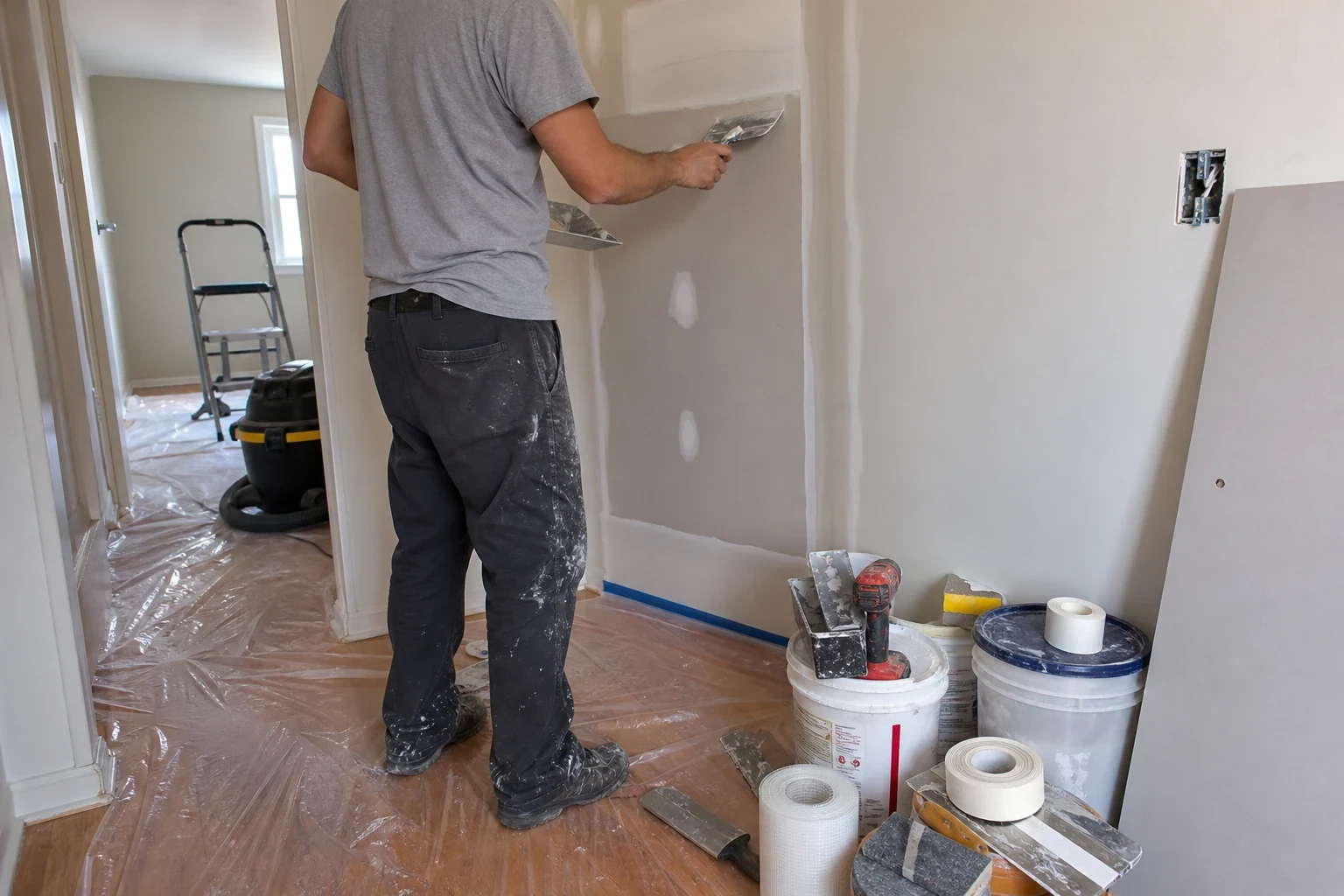
Wall repair fixes the damage that shows on a finished wall. A crack running out from the corner of a door. A hole from a doorknob. A dent left by moving day. A seam that keeps showing through paint. We remove what is weak, rebuild what is gone and finish the spot so it matches the wall around it.
Your walls may not all be drywall. Plenty of older houses in Bayonne mix plaster in some rooms with drywall in others. Plaster cracks and comes loose in its own way, so we find out what the wall is made of before choosing the repair.
Small damage costs less to fix today. A hairline crack takes a short visit. Ignore it for a few winters and it can grow, widen and need a bigger cut-out. If you have the chance to plan it, do.
What the Work Includes
- Crack repair
- We open the crack slightly, clean it out and set mesh or paper tape in setting compound. Taping over a crack without opening it is why so many come back.
- Hole and dent repair
- Small dents get filled and skimmed. Larger holes get a cut-out, backing and a new piece of drywall screwed in place.
- Corner bead fixes
- Dented or loose metal corner bead on outside corners gets cut back and replaced, then coated so the edge is straight again.
- Plaster wall repair
- Loose plaster is secured or removed, and the gap is filled and skimmed so the patch sits flush with the old surface.
- Texture matching and sanding
- We match the existing finish, smooth or textured, and sand so the repair does not show when light hits the wall.
- Paint touch-up
- If you have the leftover paint, we can prime and touch up the repaired area. See our Paint Touch-Ups page for how that works.
When Your Walls Need Repair
The same crack shows up again
A crack that reappears after filling means the earlier fix did not hold. It needs to be opened and properly taped.
Slanted cracks near openings
Framing that settles or moves is the usual cause. Most of these are standard wall repairs, and the job stays small when you catch them early.
Bumps and fasteners pushing out
Small round bumps or exposed screw heads mean the board has pulled off the stud. We secure it with fresh screws and refinish the spot.
Stains or spots that feel soft
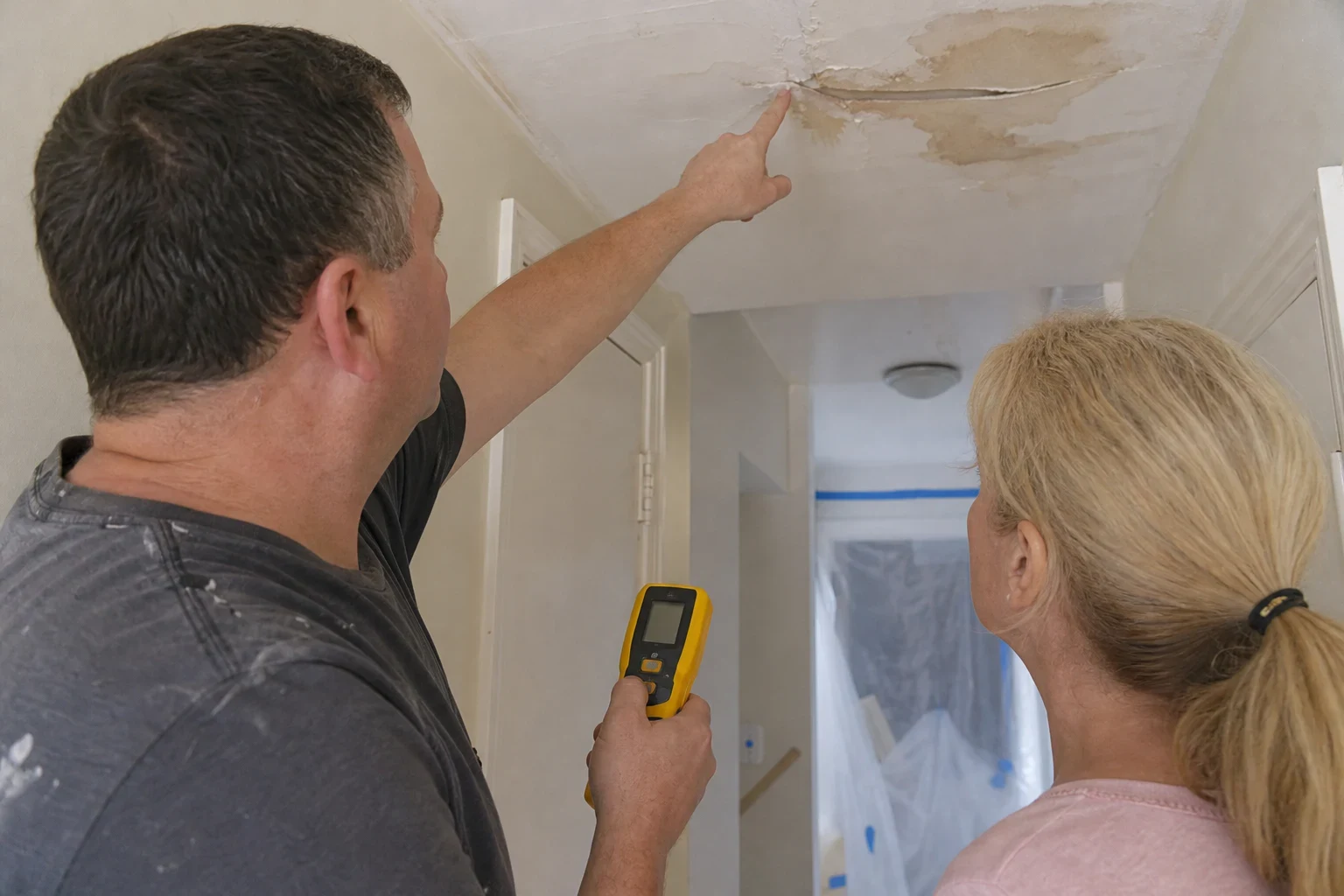
A brown mark or an area that gives when pressed is a sign of past moisture. After the leak is repaired and the wall is dry, we remove the damaged part and replace it.
Seams showing under paint
Visible lines or lifting tape at the joints tell you the original finish failed. We retape the seam and spread the compound out wide.
How We Handle a Wall Repair
- 1
Call us first
Tell us what the damage looks like and where it sits. We ask how big it is, what the wall is made of and when you would like it fixed.
- 2
A look in person and a written list
We come see the damage and give you a written estimate with each repair on its own line. You pick what happens now and what can wait.
- 3
Protect the space
When we arrive, we lay covers over the floor and nearby furniture and set up a tidy work zone. Dust stays at the repair.
- 4
Repair, then dry
We do the cut-outs, patches and taping. Compound has to dry between coats, so larger repairs usually take two or three short trips.
- 5
Final finish and cleanup
We sand one last time, match the texture and do any paint touch-up you asked for. Then we vacuum, pack up and check the wall together with you.
What Moves the Cost
Wall repair is priced by the job, not by a flat rate. Two cracks of the same length can cost different amounts depending on what is behind them. Your written estimate lists each item so you can see where the money goes and plan around it.
- Size and number of repairs
- One doorknob hole is a small job. Several repairs in the same room are cheaper to do in one trip than spread over several.
- Drywall or plaster
- Plaster usually takes more time to secure, fill and blend than drywall.
- Texture and finish
- A smooth wall is simpler. Matching an old texture takes more care and sometimes more coats.
- Hidden damage
- If we open a wall and find wet or crumbling material, the repair grows. We show you what we found before going further.
- Access
- Tall stairwell walls or spots behind built-ins take more setup time.
Wall Repair Questions
Something not covered here? (201) 584-5880
What is the difference between wall repair and drywall repair?
Our Drywall Repair page focuses on drywall itself, including larger sections and replaced boards. Wall repair covers the everyday damage on any finished wall, drywall or plaster. There is overlap, and on the phone we will tell you which kind of work your wall needs.
Will the repair show after it is painted?
Done right, it should not. We feather the compound well past the damage and match the texture before any paint goes on. Paint sheen matters too, so a small touch-up on an old wall can look slightly different until the full wall is repainted.
Can you fix cracks in old plaster walls?
Yes. We check whether the plaster is still holding to the lath. Loose areas get secured or cut out, then we tape and skim so the crack has a better chance of staying closed.
How long does a wall repair take?
Small dents and nail pops can be done in one visit. Holes and cracks that need tape and several coats usually take two or three visits because each coat has to dry.
Do I need to move my furniture?
It helps if you clear a few feet in front of the wall. We cover what is left and keep the work area clean.
Put Your Wall Repairs on the Schedule
Let us know what is cracked, dented or stained, and we will book a time to see it and write it up. Repairs done when you choose go better than repairs done in a hurry.