ServicesDrywall Repair
Drywall Repair in Bayonne
Cracks, holes, popped screws and stained spots get bigger if you leave them. We find what caused the damage, fix the drywall properly and finish it so it blends in. You get a clear scope first, so you can budget and pick a time that works.
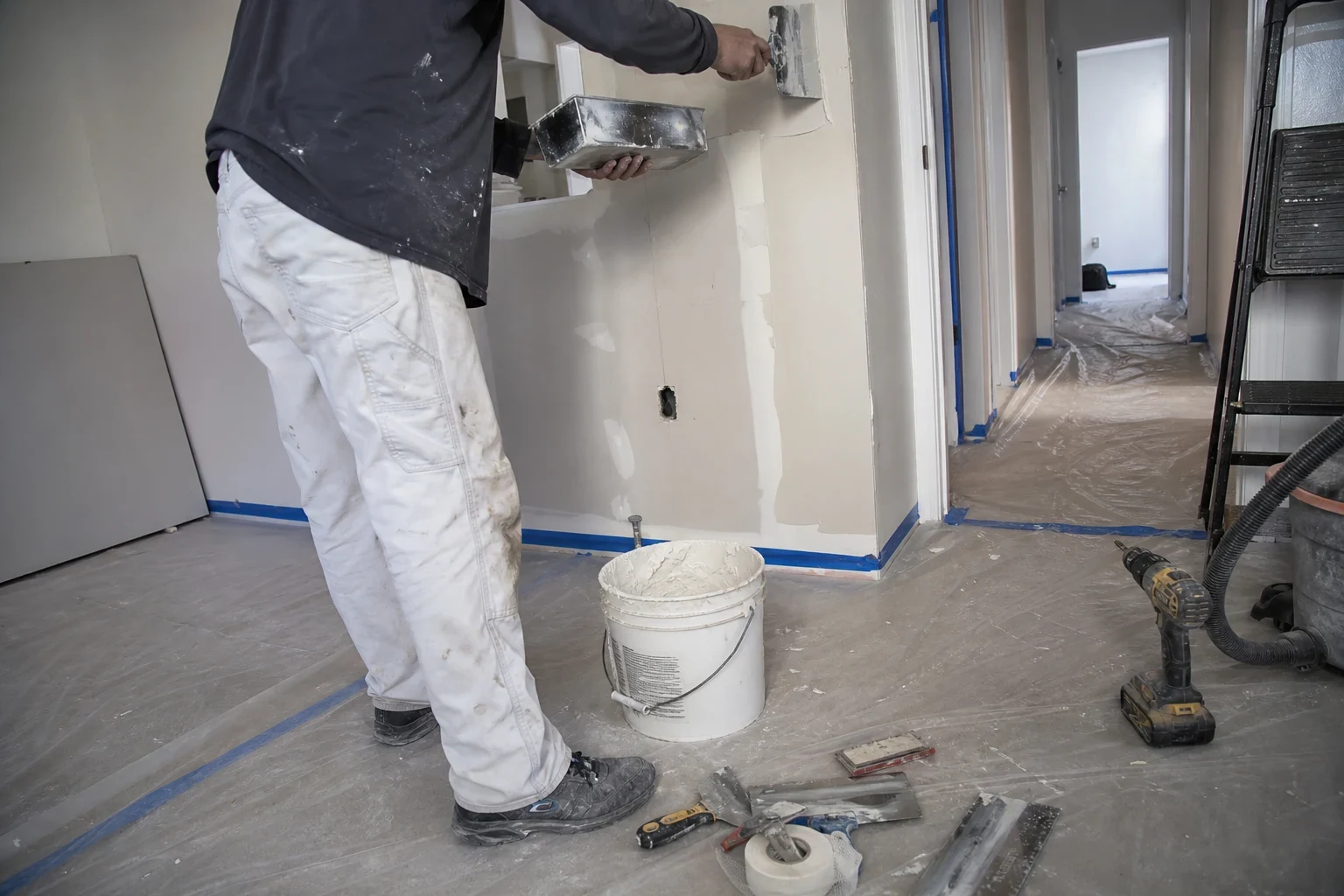
What drywall repair covers
Drywall repair is the general fix for walls and ceilings that are cracked, dented, punctured, loose or stained. Most jobs mix a few problems in one room. A doorknob hole by the entry, a crack over a window, a few nail pops along a seam. We handle them in one visit instead of one at a time.
The goal is a repair you can't find later. That means cutting out soft or broken board, backing it where needed, taping, three coats of compound, sanding and texture matching. If you only have one small hole, our drywall patching page covers that. If a whole section needs new board, see drywall hanging.
Small damage is cheap to fix. The same damage after a few seasons of door slams, humid summers and dry winter heat usually isn't. That's why we'd rather look at it early, tell you what can wait and what can't, and let you plan.
What's included in the work
Tracking down why it happened
Cracks that return have a source. Before any repair, we look for loose screws, a failed tape joint, shifting framing or an old leak, so the fix lasts.
Removing damaged board
Board that is crumbling, soft from water or broken is cut back until we reach sound material. Bigger openings get wood backing so the new piece lies flat and stays in place.
Taping and mudding
Joints get new tape, mesh or paper to suit the spot. A fill coat follows, then two finish coats, each spread wider than the one before so no bump is left.
Smoothing and matching texture
We sand the area flat and copy the surrounding texture, from a smooth wall to light orange peel or a knockdown ceiling.
Priming and paint touch-up
Fresh compound takes paint differently from the wall around it. Priming the repair keeps the touch-up from looking dull or shiny.
A tidy workspace
We cover floors and furniture, keep dust inside the room and vacuum and wipe surfaces before leaving.
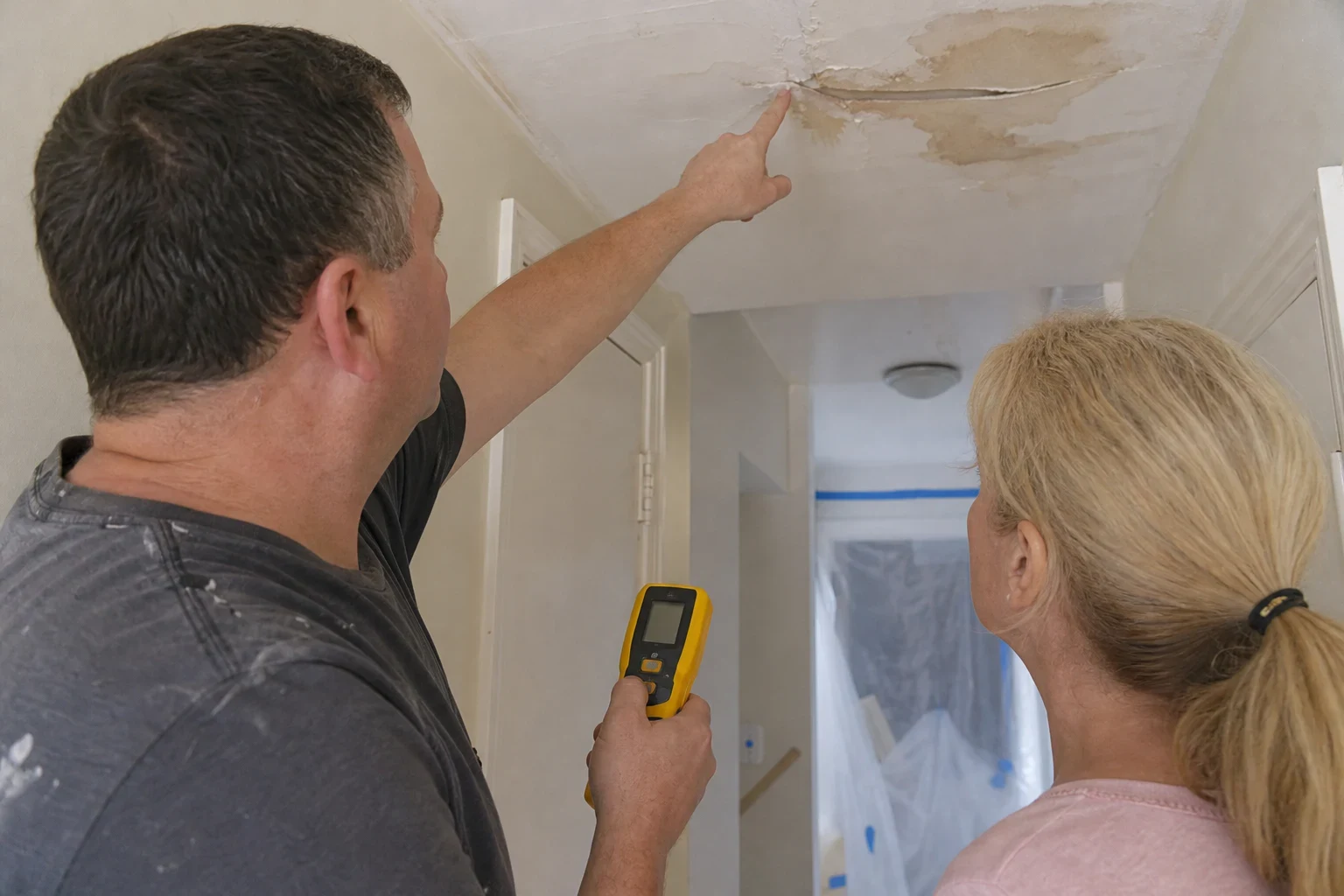
Signs your drywall needs repair
- Cracks off door and window corners
- Angled cracks running from the corners of openings often appear as a house settles and dries. Most are only cosmetic, but they open wider once the tape lets go.
- Popped nails or screws
- A line of little round bumps means fasteners are working loose. Paint will not fix them. They have to be reset and covered over.
- Stains or spots that give
- A brown ring or an area that sinks under your finger means water got in. After the leak is repaired and things are dry, that board should be replaced.
- Tape lifting or bubbling
- A ridge along a joint means the tape has come loose. It will not flatten out by itself.
- Dents and holes
- Door handles, moving furniture and leftover anchors cause damage that is simple to repair today and irritating to live with for years.
How a repair visit goes
- 1
We talk by phone
You tell us what you're seeing and where. Photos help us come prepared. We set a time to look at it in person.
- 2
We look and write it up
We check every spot you point out and any we notice. You get a written scope of what needs doing, what can wait, and how long it should take.
- 3
Prep and repair
We cover the floor, protect nearby furniture, cut out bad board and set backing. Tape and the first coat of compound go on the same day.
- 4
Coats, sanding and finish
Compound needs drying time between coats, so most repairs take two or three short visits. Then we sand, match texture, prime and touch up paint.
- 5
Walkthrough and cleanup
We look at the work with you in normal room light, fix anything you're not happy with, and leave the room clean.
What moves the cost
Every repair is priced from what we actually see, not a flat guess. We'll walk you through the scope before any work starts, so you know where the money goes. If you want to spread work out, we can split it into what's urgent now and what can be planned for later.
- Size and number of spots
- One dent and a dozen nail pops are different jobs. Grouping several repairs into one visit usually costs less than separate trips.
- What's behind the wall
- Wet board, missing backing or damaged framing adds time. We won't know for sure until the bad section is open, and we'll tell you before going further.
- Ceilings and height
- Overhead work is slower, and tall stairwells need ladders or planks set up safely.
- Texture and finish level
- A flat wall is quicker to blend than knockdown or a heavy hand texture. Walls hit by strong side light need a smoother finish to hide the repair.
- Paint matching
- If you have leftover paint, we use it. If not, the touch-up may need to run corner to corner on that wall so it doesn't show.
Drywall repair questions
- Will anyone be able to see the repair?
- Usually not, once it is primed and painted. The toughest cases are walls with window light raking across them and paint that has faded with age. If a touch-up might show, we tell you before we start and explain what it would take to prevent that.
- Why does my crack keep returning?
- Most often it was filled with compound or caulk and never retaped, or the joint underneath is still shifting. We open it, tape it properly and check the screws around it. That is what stops it from coming back.
- After a leak, when can the wall or ceiling be fixed?
- As soon as the leak is repaired and the area has dried out completely. Covering damp board holds moisture in and can cause mold. We remove the stained, soft part and put in new drywall. Our ceiling repair page has more on overhead damage.
- How long does a repair job last?
- Small fixes usually need two short trips since compound must dry between coats. Larger jobs across several rooms can take a few days. The timeline is part of your written scope.
- Should I move my furniture?
- It helps to take down wall hangings and move small things out of the way. We cover the floor and bigger furniture ourselves and keep dust inside the room we are working in.
- Can some repairs be put off?
- Many can. Cosmetic dents and hairline cracks usually hold for a while. Water-damaged or soft board and loose tape should not wait. We sort your list so you can schedule the rest when your budget allows.
Get your drywall repair on the calendar
Tell us what's wrong and where. We'll set up a time to look, give you a clear scope, and help you decide what to do now and what to plan for.