ServicesPaint Touch-Ups
Paint Touch-Ups for Bayonne Homes
Even a well-done drywall patch gives itself away when the paint on top is off. We match the color and the sheen, prime each repaired spot and paint it out until the wall looks like one piece again. Book it ahead and it happens when it suits you.
What a Paint Touch-Up Fixes
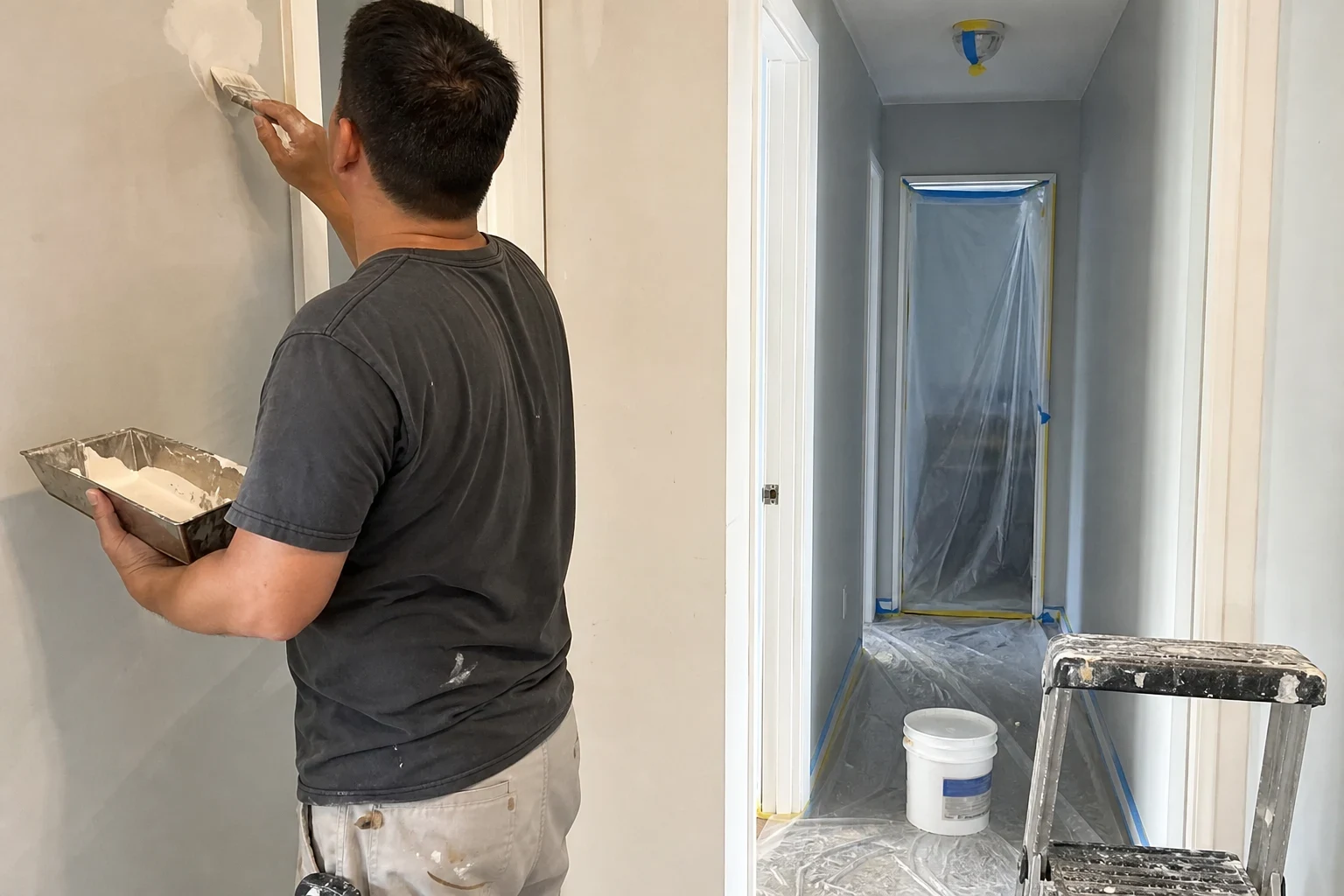
A paint touch-up is the last step after a wall or ceiling has been repaired. It covers the patch, the scuffs and the nail pops so you stop seeing them every time you walk past. Done right, nobody can find the spot. Done wrong, you get a shiny square or a slightly different shade that looks worse than the dent did.
Most bad touch-ups come from three things. The paint is the wrong sheen, the patch was never primed, or the paint was dabbed on instead of carried out to a corner or edge. We handle all of that as part of the job.
This is small work, and it is easy to keep putting off. If you are getting ready for guests, a sale or a new tenant, call a few weeks ahead. We can group your spots into one visit and you know what it costs before we show up.
What the Work Covers
Matching color and sheen
With a leftover can, we read the label and check that the paint is still good. Without one, we take a tiny chip from an out-of-sight spot and have it matched. Flat, eggshell and satin each catch light their own way, so sheen gets the same attention as color.
Primer on every repair
New joint compound drinks paint faster than the surrounding wall, which leaves a dull or glossy halo. Each patch gets primer first so the top coat dries evenly.
Carrying paint to an edge
Little dabs nearly always show. We brush or roll out to a corner, a trim line or the whole wall section, so the edge of the new paint lands where the eye won't catch it.
Touch-ups on ceilings
Flat white ceilings are tougher to blend than people think, especially after ceiling repair. We match both the shade of white and the roller texture, not only the paint.
Protected floors and cleanup
We put drop cloths down before any can is opened. When we go, the tape is pulled, the floor is swept and your furniture is back in place.
When a Touch-Up Is Due
- An old patch still shows
- A square that looks lighter or glossier than the wall was probably painted with no primer underneath. It needs primer and a real finish coat.
- Marks that cleaning won't remove
- Stair walls, hallways and the wall behind a door get hit the most. Once scrubbing starts pulling paint off, painting over it is the fix.
- Holes left by pictures or shelves
- A filled hole still needs paint over it. A batch of small spots is quick work when they are handled in one visit.
- Paint that has faded or yellowed
- Sun fades paint by windows, and older paint can turn yellow. A fresh dab won't match it, so we explain how much area has to be painted to blend.
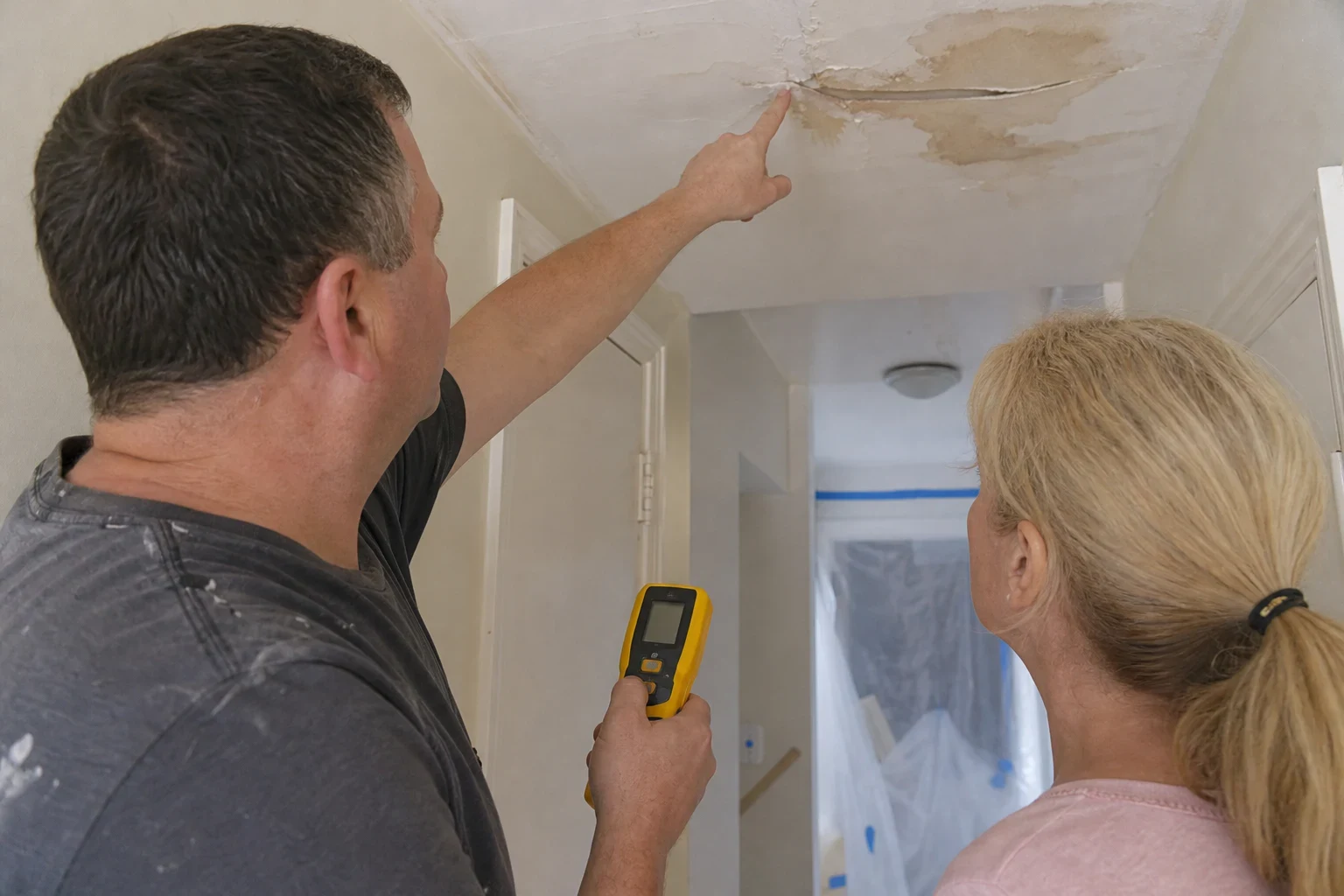
- Marks left after a leak repair
- After the leak is fixed and the drywall has dried, water marks need a stain-blocking primer. Ordinary paint lets them show through again.
How a Touch-Up Visit Goes
- 1
Talk it through by phone
You tell us how many spots, which rooms and whether you have the original paint. We set a date that fits around your plans.
- 2
Look and test
On the day, we check each area in good light. If the match is uncertain, we brush a small test spot and let it dry before going further.
- 3
Prep the surface
We clean the area, lightly sand any rough edges and prime patched or stained spots. Floors and nearby furniture get covered.
- 4
Paint and blend
We apply the finish coat and carry it out to a break line. Most walls need two coats for an even look.
- 5
Walk through and clean up
We check the work with you, from the angles you actually see it. Then we pack up and leave a clean work area.
What Moves the Price
Touch-ups are priced by the work involved, not by a set rate per spot. Before we start, you hear what it will cost and why. If a spot will not blend without painting more of the wall, we say so up front.
- Number of spots and rooms
- Ten nail holes in one room is quicker than three scattered patches across two floors. Grouping work into one visit keeps the cost down.
- Whether you have the paint
- Having the original can saves the time of getting a match made. Old paint that has dried out or separated may still need replacing.
- How far the paint has to go
- Fresh walls can take a small touch-up. Faded or older paint often needs the full wall section painted corner to corner to blend.
- Prep and priming
- Unprimed patches, water stains and rough compound add steps. Stain-blocking primer takes extra time to dry before the finish coat.
- Height and access
- Stairwells and high ceilings need ladders or planks. Rooms full of furniture take longer to set up.
Common Touch-Up Questions
- What if the original paint can is gone?
- We can usually still match it. A tiny chip from a hidden spot gets taken in for matching. Getting the sheen right is trickier, so we try a test patch before covering the full area.
- My old touch-up has a shine to it. What went wrong?
- Painters call that flashing. Paint laid over bare compound, or paint in the wrong sheen, dries with a different look. Priming first and painting out to a natural edge is how we prevent it.
- Can you paint only the spot itself?
- On newer paint with a close match, a small area often works. On faded or older paint, a small spot sticks out. We give you a straight answer before any work begins.
- Can the touch-ups follow right after a drywall patch?
- Yes. When the compound has dried completely and been sanded, we prime and paint. Booking drywall patching together with touch-ups gives you one plan and fewer trips.
- When can I use the room again?
- In most cases the same day. Paint keeps hardening after it feels dry, so wait a couple of weeks before scrubbing it or pushing furniture against it.
Get the Small Spots Handled Before You Need Them Done
Tell us what you're looking at and when you need it finished. We'll talk through the work and the cost by phone so there are no surprises on the day.