ServicesDrywall Patching
Drywall Patching in Bayonne
We patch holes in drywall, from a pencil-size anchor hole to a cut-out the size of a pizza box. Each patch gets backed, taped, feathered and sanded so it sits flat with the wall. Get a quote by phone and pick a day that works for you.
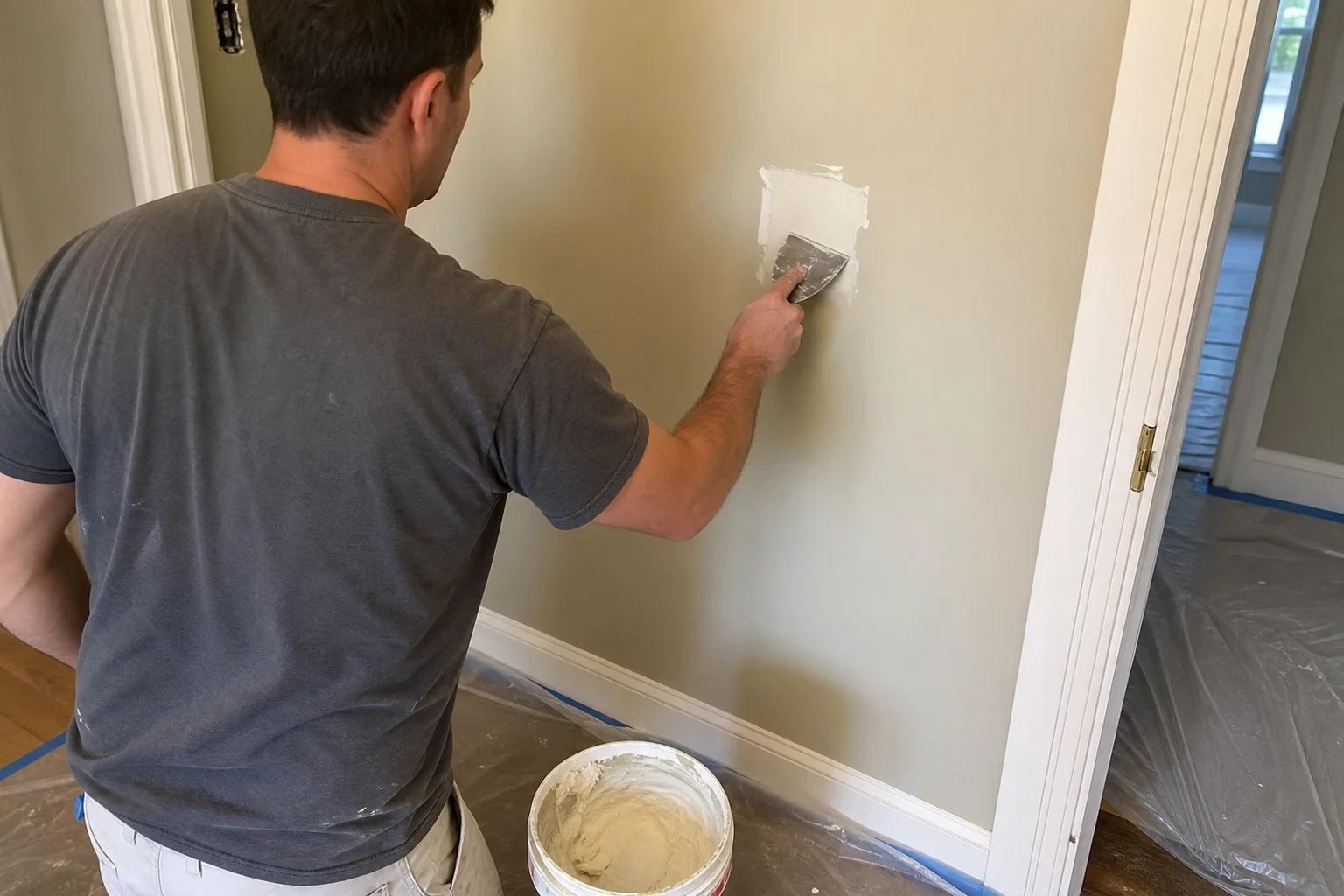
What drywall patching is and when it fits
Patching is for damage you can draw a circle around. A doorknob punched through the wall. Anchor holes left by a TV mount. A square someone cut to reach a pipe or a wire. The wall around it is solid, so we fix the hole and leave the rest alone.
If the damage spreads, like soft drywall from a slow leak, cracks that keep coming back, or a sagging section, a patch is the wrong answer. That job belongs under drywall repair or wall repair, and we will tell you so when we look at it.
Most patches are small jobs that are easy to put off. We find they go best when you plan them: group a few holes into one visit, schedule it before guests or a new tenant, and you pay for one setup instead of three.
What comes with every patch
Cutting back to solid board
We square up the hole and trim away torn paper and crumbled gypsum. A patch only holds if the edges around it are sound.
Backing for larger holes
Anything bigger than a few inches gets wood backing or a California patch so the new piece is screwed or bedded in, not floating on mud. Small holes get mesh or setting compound.
Tape, mud and feathering
We use setting compound for the first coat because it cures hard and shrinks less. Finish coats are feathered wide, often a foot or more past the hole, so there is no hump when light hits the wall from the side.
Sanding and texture matching
We sand between coats and match the texture around the patch, whether that is smooth, orange peel or a light knockdown. The goal is a patch that blends into the wall so well you have to hunt for it.
Primer and a clean work area
Every patch is primed so paint does not flash or look dull over the new mud. We cover floors, bag the dust and vacuum before we leave. If you want the color put back too, that is our paint touch-ups service.
Signs a patch is the right call
A hole from an impact
Doorknobs, chair backs and moving furniture leave clean dents and punch-throughs. These are classic patch jobs.
Old anchor and mount holes
Taking down shelves, a TV mount or curtain rods leaves a row of holes and torn paper. Filling them with spackle alone often shows through paint.
Access cuts that never got closed
An electrician or repair crew cut in to reach something and left a rough square. We close it up flat.
A bad patch from before
A raised outline, a ring you can see at night, or a patch that cracked around the edges. We cut it out and redo it right.
Getting a unit ready
Landlords and property managers often have a list of holes between tenants. A planned visit handles all of them in one pass.
How a patch day goes
- 1
Talk it through by phone
Tell us how many holes, how big, and which rooms. Photos help us size the job. We give you a quote and set a day.
- 2
Prep and first coat
We lay drop cloths, cut back the damage, set backing and put on the first coat of setting compound. Larger patches get tape at this stage.
- 3
Build and feather
We come back with finish coats once the first coat is hard. Each coat goes on thinner and wider. Small patches can sometimes be done in one day with fast-setting mud; bigger ones usually take two or three short visits.
- 4
Sand, texture and prime
We sand smooth, check the patch with a work light held flat to the wall, match the texture and prime. Then we clean up and walk you through it.
What sets the price of a patch
We usually price patching by how many holes there are, how large they are and how many trips the mud needs to cure. Your quote is written out line by line so you see what each part costs. Doing several patches in one visit is the simplest way to spend less.
- How many holes and how big
- Setup is about the same for one small hole or ten. Big holes need backing and extra coats.
- Wall texture
- Smooth walls are the easiest. Orange peel or knockdown takes longer to match so the patch blends in.
- Where the hole is
- Holes behind a toilet, above a stairwell or high up need ladders or more careful work. Patches on a ceiling take longer than ones on a wall.
- How many trips
- Compound must cure between coats. Quick-setting mud can save a trip on small jobs, but big patches still need time to dry.
- Putting the color back
- Primer comes with the patch. Repainting the color over it is our paint touch-ups service, and we can add it to the same quote if you ask.
Drywall patching questions
Something not covered here? (201) 584-5880
Will I be able to see the patch afterward?
Not if it is done right and the color is matched. We feather wide and match the texture so the wall stays flat in side light. The color is the other half, which is why many people add a paint touch-up.
Can you patch plaster walls too?
Small holes in plaster can often be filled with setting compound and a mesh backing. Bigger damage in plaster is a different job. Tell us what you have when you call and we will say which way to go.
How long does a patch take?
A few small holes can often be finished in a day. A larger patch with tape and backing usually needs two or three short visits so each coat can cure.
Do I need to move furniture?
Clear a few feet in front of each patch if you can. We cover what stays and protect the floor. Anything heavy we can work around.
Should I patch now or wait until I deal with the color?
Patch first. Primed patches hold up fine for months, so you can schedule the patch work now and a paint touch-up later when it suits your budget.
Get the holes on the schedule
Count up the holes, take a few photos, and give us a call. We will price the whole list and set a day before it turns into a bigger job.